It took me until this week to learn that Scott Adams, the creator of Dilbert, died of prostate cancer at the start of January at 68. The news has given me real pause.
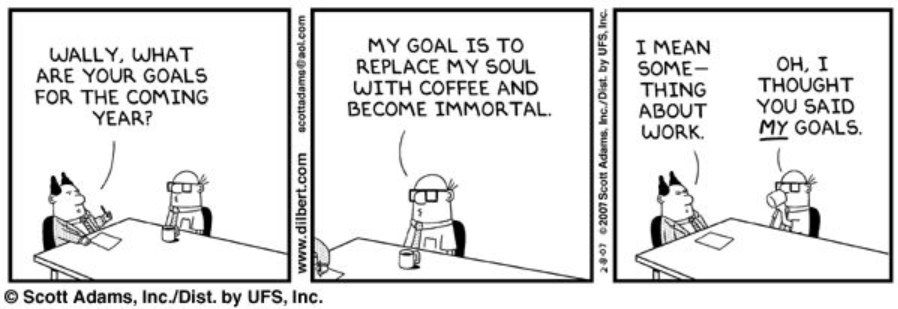
It’s no exaggeration to say I grew up with Dilbert. The Dilbert Principle was the first book on leadership and management I ever read — in secondary school, no less (thanks dad). It was the 90s, and I was already well on my way to refining the level of snark that would later serve me so well on my journey to corporate mediocrity.
What I didn’t realise then was just how useful that early interest in this brand of corporate anthropology would become. Dilbert became shorthand for surviving meetings that should have been emails, navigating infuriating colleagues, managing “that” boss, and working on projects with so little governance you genuinely wonder how the place isn’t on fire — all while maintaining minimal contact with HR.
Drawing on his own experience as a telecoms engineer at Pacific Bell, Adams held up a mirror to corporate life. He created an eerily recognisable cast of characters you’ve either met or will meet, offering the strange comfort of knowing you’re not alone — even when, in reality, you might be.
I’ve kept Dilbert strips on my desk throughout my career, stuck to my glass divider as a reminder of the futility and absurdity of the corporate machine. Over time, as the strip became increasingly user‑generated, that sense of shared experience only deepened. That weird, infuriating thing happening at work? It wasn’t just you. It was universal — across sectors, languages, and skill sets.
Of course, like many people I’ve admired, Adams was not without controversy. A man who spent years skewering institutional stupidity managed, in 2023, to fail spectacularly to read the room and became the Pointy‑Haired Boss himself. The fallout was immediate and palpable. But the legacy — the good and the bad — remains.
Dilbert captured late‑20th‑century corporate life with startling accuracy. You can see its echoes everywhere: in The Office, in corporate satire, in meme culture, in the way we collectively process the absurdity of work.
Adams’ passing is a reminder that nothing is guaranteed — professionally or personally. Stakeholder awareness matters in every part of life, and that humour without humility is just rudeness.
 Rachael McKelvey
Leave a comment